Sommaire
7 | 2026
Romantic Offshoots: Reassessing the Legacy of British Romanticism
The aim of this volume is twofold: first, to open up a space for the reassessment of artworks which hark back to, riff on, pay homage to, or uproot their Romantic precursors, while also teasing out some of the more oblique correspondences or affinities between British Romanticism and its descendent forms; and, second, to reexamine the notion of literary inheritance itself, as it pertains to such works – particularly the ways in which many twentieth- and twenty-first-century works willfully enter into an ambiguous relationship with the Romantic tradition. This special issue is itself an offshoot of a research collaboration between ERIAC (Université de Rouen Normandie) and ERIBIA (Université de Caen Normandie). The articles gathered here address the ways in which Romantic-period ideas or models have been reanimated in the light of contemporary concerns, in still-evolving genres (such as sci-fi and dystopian climate fiction, neo-historical biopics, or pop and rock music) and across different media (including graphic novels, television series, and video games), as well as in more traditional forms.

- Jeremy Elprin et Oriane Monthéard Introduction to Romantic Offshoots: Reassessing the Legacy of British Romanticism
- Nathalie Cochoy « Darkling I listen » : l’art du renoncement dans The Great Gatsby et Tender Is the Night, de F. Scott Fitzgerald
- Jeremy Elprin On Not Giving Up the Ghost; or, the Ambivalent Post of Keats’s Letters in Contemporary Fiction
- Caroline Dauphin A Genealogy of the Polypus, from William Blake to H.P. Lovecraft: The Root of All Evil?
- Janneke van der Leest Romantic Mourning for Young Deceased Rock Artists
- Fabien Desset William Blake, Karfagen and Romantic Innocence
- Cal Sutherland “Take me to the Lakes”: Romantic Retreats in Lyrical Ballads and the Lyrics of Taylor Swift
- Armelle Parey Romanticising Women Writers in Biopics: Mary Shelley (2017) and Emily (2022)
- Camille Adnot Mycological Fears: Fungi and Ecological Anxiety from Linnaeus to The Last of Us
- Aurélie Thiria-Meulemans Planting the Seeds of Post-Apocalyptic Fiction: The Legacy of Byron’s “Darkness” and Cain, A Mystery
7 | 2026
A Genealogy of the Polypus, from William Blake to H.P. Lovecraft: The Root of All Evil?
Caroline Dauphin
Depuis sa découverte au xviiie siècle, le polype inquiète autant qu’il fascine. Première créature connue à se reproduire de façon asexuée, il a d’abord intrigué les écrivains comme les naturalistes : était-il animal ou végétal ? Erasmus Darwin, à la fois poète et homme de science, lui a consacré certaines de ses réflexions dans son monumental essai Zoonomia (1794-1796). William Blake, qui l’a illustré, fait du polype un personnage protéiforme évoluant au gré de ses œuvres, dans The Book of Los (1795) comme dans Milton (c. 1804-1811). Si cette créature semble complexe et changeante, elle demeure toutefois toujours associée à la notion de végétation : ses tentacules se font racines, symboles de l’aliénation des êtres dans le monde matériel de la génération. Plus d’un siècle plus tard, c’est un autre auteur, admirateur de Blake, Howard Phillips Lovecraft, qui s’est réapproprié la figure du polype, jouant avec les codes de représentation blakiens pour mieux l’intégrer à son pandémonium personnel, en particulier dans sa nouvelle « The Shadow Out of Time » (1936). Outre le traitement poétique du polype et sa généalogie littéraire, cet article étudiera également l’évolution de ses représentations visuelles. On analysera ainsi l’adaptation de cette même nouvelle de Lovecraft par Ian Culbard en 2013 sous la forme de roman graphique, pour observer dans quelle mesure le polype étend son influence tentaculaire sur l’imaginaire romantique et post-romantique, des gravures blakiennes aux romans graphiques contemporains.
Since its discovery in the 18th century, the polypus has fascinated scientists as much as it has disturbed them. The first known animal to reproduce asexually, it intrigued naturalists and inspired writers who did not know if it was an animal or a plant. Erasmus Darwin, both a poet and a man of science, devoted some of his reflections to it in his work Zoonomia (1794-1796), as did his engraver, William Blake, who made it a poetic symbol with a protean character, evolving according to his writings, from The Book of Los (1795) to Milton (c. 1804-1811). If this creature is complex and protean, it is generally associated with vegetation: its tentacles seem so many roots, symbols of the alienation of beings in the material world of generation. More than a century later, it was another author, an admirer of Blake, Howard Phillips Lovecraft, who reappropriated the figure of the polypus, playing with Blake’s codes of representation to better integrate it into a monstrous pantheon of his own, in particular in his short story “The Shadow Out of Time” (1936). In addition to the poetic treatment of the polypus and its literary genealogy, this article will also study the evolution of its visual representations. It will focus on Ian Culbard’s adaptation of Lovecraft’s short story in the form of a graphic novel in 2013, to observe the extent to which the polypus extends its sprawling influence on the Romantic and post-Romantic imagination, from Blakean engravings to modern graphic novels.
Then view’d from Milton’s track they see the Ulro: a vast Polypus
Of living fibres down into the Sea of Time & Space growing
A self-devouring monstrous human death1
1The Blakean vision of Milton was almost prophetic: its monstrous polypus would cross the Sea of Space and Time, its tentacles spreading across the Atlantic and striking the imagination of readers of another century. The creature would indeed be fruitful and multiply in the narrative of an alternative genesis of the cosmos by American horror fiction writer Howard Phillips Lovecraft, among many other motifs reminiscent of William Blake’s imagery. Today, the polypus still casts its gigantic shadow on the readers of weird tales, more especially in graphic novels, testifying to the unabated visual fascination exerted by such creatures since their scientific discovery in the 18th century.
2However, how could a small creature, which seems to be mostly harmless (a freshwater hydra which is today related to jellyfish and sea anemones), paradoxically become the very embodiment of cosmic-scaled chaos, from the dawn of Romanticism to the dark nights of modern writers and artists? Why did Blake choose it, while the rest of Blake’s bestiary is almost exclusively inspired from the Bible (the tiger being another remarkable exception)? And how to assess and explain the posterity of the polypus as a metaphor in the artistic legacy of William Blake?
3The polypus is a remarkable creature for its so-called “vegetative” reproductive capacity: it could produce offspring without sexual reproduction, which was studied in further detail under the microscope of Abraham Trembley in 1743.2 Instead of mating with an individual of the opposite sex, the polypus divides, creating what would today be called genetically identical clones. This ability is also linked to its cell reconstruction capacities: the limb of a polypus, once cut, can grow back and even multiply, like a hydra (which is the scientific name of the genus polypi belong to in today’s classification).
4Precisely because of those fascinating qualities, the polypus is a key figure in Blake’s bestiary. It is also intrinsically “out of orders”, neither fully an animal nor a plant, which was enough to make it a subject of fascination. Susannah Gibson, in Animal, Vegetable, Mineral? How Eighteenth-Century Science Disrupted the Natural Order, depicts it as a being close to zoophytes, upsetting the order of classifications,3 which is also highlighted by Denise Gigante4 and Theresa Kelley.5 This hypothesis could be placed in line with Janelle Schwartz’s work on the representation of the worm in Romanticism. In her chapter “Blake and Taxonomy”, Schwartz emphasizes Blake’s willingness to disrupt the well-established order of taxonomy through a biological and poetic transgression.6
5However, Blake does not only use the polypus as an original way of disrupting the classification of natural historians: he also makes it a potent metaphor which fits in his own system of representation. Paul Miner shows that the image of the polypus’s tentacles seems to be closely linked to that of the roots of a tree, representing, through this symbolic network, a paradoxically deadly form of generation, “a pathological cognizance of the world of gestation.”7 More recently, Kevin Hutchings’s analysis highlights a dualism in the interpretation of the polypus: on the one hand, an organism-colony rejecting the possibility of individuality, and on the other, a symbol of community in inter-relationality, “communal interconnection.”8
6Often loaded with a strong metaphorical weight, its symbolism has nonetheless evolved, in Blake’s poetical works (as David Erdman pointed out)9 but also from one author to another. In order to better understand how this singular being came to haunt the darkest dreams of poets, novelists and illustrators, it is necessary to study its complex genealogy, which is itself half-way between science and fiction, facts and fantasy, natural history and supernatural horror stories. The meandering course of its evolution will be followed, from the scientific accounts of the Enlightenment to the dark Romanticism of 21st-century comics.
7The literary genealogy of the polypus, taking its root in Erasmus Darwin’s Zoonomia (1794-1796), will be studied through Blake’s Milton (c. 1804), H.P. Lovecraft’s “The Shadow Out of Time” (1936) and finally Ian Culbard’s adaptation of Lovecraft’s aforementioned story into a graphic novel (2013). One may think that the literary success of the polypus could illustrate what Harold Bloom famously called “the anxiety of influence”10: the same motif, echoed from one author to another, may work like a palimpsest, and show how important it is for writers to redesign it in order to find their own paths in the wake of, and also paradoxically against, their glorious predecessors.
8Yet, the evolution of the polypus in literature and visual arts goes beyond common references and direct textuality, and analyzing it in Bloomian terms may be somewhat reductive. The roots of the polypus, originating in Erasmus Darwin’s works, and then branching out from the Romantic imagination of Blake’s world of vegetation to Lovecraft’s tormented universe, can be analyzed not only in terms of “influence” but rather, as Sophie Musitelli elegantly puts it in her works on Erasmus Darwin and Percy Shelley, in terms of “confluence.”11 The complex network of ramifications of the polypus may reveal a common vision on science and imagination rather than an anxiety-driving antagonism between authors. Indeed, studying the literary genealogy of the polypus in Blake’s cosmogony, especially in Milton,12 as well as Lovecraft’s “The Shadow Out of Time,” helps determine how the reshaping of this motif actually reveals a wider conception of the biological world which fuels the artist’s imagination, from Romantic poems to horror graphic novels.
From Erasmus Darwin to William Blake
9The polypus thus evolves in a singular way in Blakean poetry: Blake’s reflection on this motif was stimulated by recent readings, more particularly those of Erasmus Darwin, who also gives a very special place to the polypus in his poems and essays. Kathleen Raine, in her pioneering work Blake and Tradition, already suggested the influence of Erasmus Darwin in the descriptions of the polypus, which she linked to the transformist verses of the Botanic Garden on the development of the crocodile,13 but without dealing with Darwin’s prose descriptions of the polypus.
10Erasmus Darwin (1731-1802) was the grandfather of Charles Darwin. Half a century before his grandson, this naturalist laid the groundwork for a transformist theory that revolutionized the vision of life. He was the author of several works of didactic poetry in which he used his talents as a popularizer to explain to his contemporaries the latest scientific advances of his time, particularly in botany: he explained the Linnaean classification in The Botanic Garden (1792)14 and his own version of the genesis in The Temple of Nature (1803). He is also the author of Zoonomia (1794-1796), a scientific treatise in prose in which he exposes, among other things, his theories on the origin of sensitiveness and the transformation of life forms.
11Blake knows him well because he was the one who was commissioned to make the engravings of the Botanic Garden after Henry Fuseli’s original drawings. He also designed and engraved the Portland Vase to which Darwin devoted several stanzas. Darwin and Blake have many common poetic interests, including a fascination with the French Revolution, the rewriting of biblical cosmogony, and metaphorical representations of nature and science in epic or didactic poems.
12In this regard, it may be useful to have a closer look at the very first appearance of the polypus in the third part of The Book of Los (1795), three years after the actual publication of the Botanic Garden and one year after that of Zoonomia. In this part, Blake describes the fall of Los into the world of generation and the development of organic life. The lungs, like other undefined, “formless” organs, float separately in a still disorganized universe, like polyps floating in water:
The Lungs heave incessant, dull and heavy
For as yet were all other parts formless
Shiv’ring: clinging around like a cloud
Dim & glutinous as the white Polypus
Driv’n by waves & englob’d on the tide.15
13Erasmus Darwin first briefly mentions the polypus in the Botanic Garden in an additional note in prose.16 However, he does not mention the polypus in his verse. He expatiates on the subject in his later work Zoonomia, in which the polypus is mentioned as a primitive organism in the chapter “Generation”. The reason it is primitive is precisely that it has no lungs: it remains in water, while others (gnats and tadpoles) have developed internal structures that allow them to adapt to life on land.
The gnat and the tadpole resemble each other in their change from natant animals with gills into aerial animals with lungs; and in their change of the element in which they live […] While the polypus, who is their companion in their former state of life, not being allowed to change his form and element, can only propagate like vegetable buds by the same kind of irritative motions.17
14The polypus is thus condemned to vegetative reproduction, by division, whereas its cousins may have developed specialized organs. The question of the specialized function of certain organs and their formation haunts Blake, and which can be read as a questioning of biological formation. Could the polypus develop lungs to become a different creature similar to the tadpole?
15The question is similar to the one found in “The Tyger”: was the tiger created from scratch, or was it spawned by successive generations of organisms that changed over time? The whole poem of “The Tyger”, based on unanswered questions, conveys a deep sense of anxiety on the biological genesis of the most complex life forms. Were the limbs of the tiger created ex nihilo in the furnaces of a God whose purpose remains uncertain? Or could the species of the tiger have been shaped more progressively, generation after generation? That alternative narrative can be read in the subtext, which is paradoxically even more frightening to Blake’s imagination. To Blake, the only thing more horrifying than a tiger created by an angry god is a tiger which would not have been created by an angry god at all: it is a soulless creature trapped in the cage of scientific materiality.
16However, the Blakean polypus is different from Darwin’s: while Darwin chooses scientific prose to elaborate on the biological development of water creatures, as he often does for more complex subjects, Blake rewrites the scientific narrative in verse to expose the dangers of materialism – but also find original poetic motifs. The common feature between the polypus and the tiger is that they are among the rare animals in the Blakean bestiary which are not mentioned in the Bible, and which show the modernity of Blake’s choices in terms of animal representations.18
17What is more, there are other key differences between Blake’s polypus and Darwin’s: the former is marine (“waves”, “tides”) while the latter lives in fresh water. However, Blake wants to go beyond Darwinian speculation on the genesis of the world, imagining a polyp-lung bathed in a primitive ocean, associated with the development of life by successive generations. He skillfully associates the polypus with the vegetative mode of reproduction:
He arose on the waters but soon
Heavy falling his organs like roots
Shooting out from the seed, shot beneath…19
18The development of new organs is associated with plant development, that is vegetative growth. This comparison between polypi, organic growth and plant development, “like roots”, “from the seed”, is not a simple fiction of the poetic imagination, but is directly inspired by Zoonomia, in which Darwin compares the development of polyps to that of buds on trees, even more markedly than Trembley or Réaumur. Darwin observed the polypus as a botanist:
Those who have attended to the habits of the polypus, which is found in the stagnant water of our ditches in July, affirm, that the young ones branch out from the side of the parent like the buds of trees, and after a time separate themselves from them. This is […] analogous to the manner in which the buds of trees appear to be produced.20
19In Blake’s eyes, this vegetative generation is doubly monstrous. In the first place, “generation” in the Humean and Darwinian sense is opposed to the notion of “creation” and implies a strictly materialist system. In addition, the vegetative reproductive system is described as primitive by Darwin: it precedes sexual reproduction, which is the masterpiece of nature, and was produced by adaptations and transformations of successive generations of plant species that have previously passed through an intermediate stage, that of hermaphrodites. The notions of “generation” and “vegetation” are therefore closely linked.
20In the second place, their association is materialized in hybrid beings, which only have a collective existence: trees and polyps are colonies of individuals. It is not surprising, then, that Blake sees this vegetative generation as a prison of flesh where identity is dislocated, multipolar consciousness enmeshed in the chain of generation that must lead to sexual reproduction and the emergence of an individual consciousness. It is precisely this reflection, on trees and polyps, that will lead Blake to develop original comparisons in Vala, in Jerusalem and in Milton, A Poem.
A Multifaceted Being: The Evolution of the Polypus in Blake’s Poetry
21In Vala, begun by Blake in 1797, the polypus is still experimental: it makes only two short appearances, including one at the end of Book IV, when Los attempts to rebuild the world on the ruins left by Urizen. The corpse of Albion or Man (corrected by Blake on some copies), in the Sea of Time and Space, is compared to a polypus that, once again, “vegetates” under the sea, just as the limbs of man “vegetate” in these primary forms of reproduction, very similar to the floating lungs compared to polypi in The Book of Los:
The Corse of Albion [Man] lay on the Rock the sea of Time & Space
Beat round the Rock in mighty waves & as a Polypus
That vegetates beneath the Sea the limbs of Man vegetated
In monstrous forms of Death a Human polypus of Death21
22Through this passage through generation, man dislocates and loses his own identity, like the polypus and the tree that bring together colonies of individuals. The first shift from the comparison to the metaphor illustrates this tragic loss of individuality and identity: “as a polypus” becomes “a human polypus”. This transition also marks an additional hold of the polypus on the text and its objects: through its becoming-metaphor, it colonizes the human body in its entirety, both a tissue of flesh and a fabric of words. However, this was only the beginning of colonization: the capital letter was still on “Human”, and not on “polypus.”
23It is in Jerusalem: or, The Emanation of the Giant Albion, that Blake makes the polypus a recurrent metaphor for the dissolution of individuality and materialist generation: the polypus gains another step in its hold on the text, as Camille Adnot explains in her article published in the present volume.
24Finally, it is in Milton, A Poem, begun in 1804, that the polypus becomes most widespread. Blake begins by taking up his first tropes: the polypus of vegetative reproduction, “a Polypus that vegetates beneath the deep,”22 then the tree-polypus taking on a human form, “No Human Form but only a Fibrous Vegetation / A Polypus of soft affections without Thought or Vision,”23 then human individualities merging into a being-colony, “every Man born is joined / Within into One mighty Polypus, and this Polypus is Orc.”24 Once again, the polypus-metaphor begins by bringing together its different subjects to gradually broaden and to finally take on new proportions: those of the polypus-universe.
25Indeed, in Milton, the Blakean polypus seems to reach the final stage of its development, being identified with Ulro, the universe of deadly materialism: “Then view’d from Miltons Track they see the Ulro: a vast Polypus / Of living fibres down into the Sea of Time & Space growing / A self-devouring monstrous human Death.”25 As in the Book of Los, the polypus swims in the Sea of Time and Space, except that this time it has taken possession of the text, becoming a spun metaphor whose parasitic character is transcribed by a series of enjambments, as if the polypus had taken possession of the body of the text itself, and extended its deadly tentacles from line to line. The head of the polypus is no longer Verulam, the city of Baconian science, but the cities of the Levites, which in the Bible God commands to be multiplied.
26Blake also extends in Milton his reflection on biological gender begun in Jerusalem. Whereas in Jerusalem the polypus was strictly composed of males, it is the appearance of a feminine form that in Milton will make it possible to go beyond the generation of the polyp: Ololon, by introducing the feminine element, makes it possible to break the dynamic of vegetative reproduction in favor of sexual reproduction.
For Ololon step’d into the Polypus within the Mundane Shell
They could not step into Vegetable Worlds without becoming
The enemies of Humanity except in a Female Form
And as One Female, Ololon and all its mighty Hosts
Appear’d26
27Blake thus reappropriates the metaphor of the polypus: he prefers to question the biological polypus presented by Darwin in Zoonomia and the Botanic Garden, and to create its poetic equivalent, a parasitic metaphor that multiplies tropes and divides them, gradually colonizing the space and motifs of the text. This metaphor of vegetative generation also illustrates Blake’s interrogations on Darwinian biology, whether it be the spiritual status of trees or the emergence of sexual life.
28Curiously, Blake does not reject the Darwinian vision of a primitive world without God, where generation makes the different forms of organized life succeed each other, but he integrates it into his cosmology: rather than a mere anxiety of influence, it is a confluence, as Sophie Musitelli puts it to describe the link between Darwin’s poetics and Shelley’s. Similarly, Blake accepts Darwin’s ideas as a stratum in his multiverse, as a possible and paradoxical dimension, because the birth of organic life according to Darwin is none other than the beginning of spiritual death according to Blake.
29The polypus having thus become the very embodiment of horror in Blake’s epic narratives, it could spread its deadly tentacles even further, in the imagination of Blake’s readers. Lovecraft was one of them, and many Lovecraftian monsters are reminiscent of the Blakean polypus, like Cthulhu, the most famous creature of Lovecraft’s own pandemonium. However, how to analyze the connection between Lovecraft and Blake? Is the Lovecraftian monster an offshoot of Blake’s tree of vegetation and generation? Can another kind of confluence be observed, especially regarding Lovecraft’s relationship to science and materialism in comparison with Blake’s?
Lovecraft: A Shadow Out of… Blake?
30Howard Phillips Lovecraft was an admirer of William Blake, whose visionary work is used in his correspondence as a case in point to praise the genius of “introverts”. “Introverts”, according to H. P. Lovecraft’s definition, are people who are often gifted with a wild imagination and who tend to imagine things from the inside, contrary to “extroverts”, over-rational individuals who project their thoughts directly on the canvas of reality: “Introverts, I think, must tend to imagine more or less distortedly — in the William Blake or semi-cubist manner. […] Introversion means originality at its best and affectation or madness at its worst. I have much admiration for the best type of introvert.”27
31This penchant for Blakean poetry is particularly remarkable in two short stories: “The Haunter in the Dark” (1935) and “The Shadow Out of Time” (1936). Though the polypus does not appear in “The Haunter in the Dark”, this short story is nevertheless worth a brief stop to observe the Blakean imagery that is already at work in Lovecraftian writing. The main character is named “Robert Blake”. Lovecraft scholars have noted that the name was an allusion to a friend of his, Robert Bloch. The character, “a writer and a painter,”28 explores the ruins of an ancient temple and is seized by visions revealing to him the “vortices of space”29 in the heart of darkness, “a window of all time and space.”30 He dies after the creatures he has let escape from a cursed temple take possession of him; his corpse seems to have been struck by lightning.
32Yet, a filiation with William Blake is possible: in Milton, Blake depicts his brother, himself named Robert Blake, on a full-page engraving. Robert Blake was a painter himself, like William. He is in fact represented in the role of the poet, bard, soothsayer and visionary, the one on whom Milton’s soul falls in the form of a shooting star to become one with him, after having crossed the Vortex of time and space and having stayed among the shadows. Thus Lovecraft seems to take up several Blakean tropes for his own benefit, to divert them within a resolutely nightmarish story.
33This filiation is all the more striking in another short story, published shortly later: “The Shadow Out of Time.” A distorted vision of time and space, megaliths and fascination for ancient cults, an original pantheon... The imagination of the two writers is, once again, nourished by a number of common images, which could also be analyzed in terms of “confluence”. In this short story, Lovecraft features a university professor, Nathaniel Peaslee, who loses consciousness during one of his classes. When he wakes up, he is no longer the same man: an entity from a powerful alien race, the Yiths, has taken possession of him. Five years later, when his spirit returns to his body, he retains visions of the Yith, as well as their worst enemies, polypi, whose mission is to colonize the earth. During archaeological excavations, he discovers the sanctuary at the bottom of which the polypi had been chained... before being released. However, he does not know whether all his discoveries are real or imaginary.
34The polypus is, in fact, a creature that haunts the Lovecraftian imagination. Just as in Blake’s work, its form is not always clearly defined, and the mystery that hovers over its contours adds to the horror it inspires. It would certainly be easy to link the image of the polypus to that of the octopus that inspired “The Call of Cthulhu” (1928), a short story published a few years earlier, in which the eponymous monster is described in more detail.31 Lovecraft’s correspondence, cited above, however, records a reflection on the influence of Romanticism on his writing and personality. He may have identified with Blake as a misunderstood genius, though he does not explicitly portray himself as such. He shares at least a sense of anxiety present in Blake’s poetics through the representation of the polypus, especially in “The Shadow Out of Time.”
35In this short story, there are actually two monsters inspired from polypi: the first ones are the “Great Race” of the Yiths, which certainly seems to recall, by their tentacles, the well-known monster of Cthulhu. However, their general morphology differs: these creatures are endowed with a conical body and several tentacles and eyes:
The Great Race’s members were rugose cones ten feet high, and with head and other organs attached to foot-thick, distensible limbs spreading from their apexes. They spoke by the clicking or scraping of huge paws or claws attached to the end of their four limbs, and walked by the expansion and contraction of a viscous layer attached to their ten-foot bases.32
36These creatures are also characterized by their thirst for knowledge; their curiosity is unquenchable, and the narrator’s visions depict vast archival libraries where they record the testimonies of past and future eras, since they control the flow of time. In this, they are reminiscent of the Blakean polypus, associated with rational knowledge and the triple influence of Newton, Bacon and Locke, who evolve in the world of materialism, crossing the Sea of Time and Space.
37However, this definition of knowledge must be put into perspective: while the Blakean polypus embodies a form of overwhelming rationality that stifles the divine imagination, Lovecraft’s Yiths seem to be creatures whose appetite for knowledge is not a threat to humanity. While the Blakean poet, hero of Milton and Jerusalem, tries to emancipate himself from the tutelage of an abusive rationalization, Lovecraft’s narrator, on the other hand, desperately clings to logic to fight against his nightmarish visions that make him lose his sense of reality. The two monsters therefore differ in the status attributed to the forms of knowledge. Nathaniel Peaslee, Lovecraft’s narrator, is in fact an “extrovert” who became an “introvert” by force of circumstances. The “extrovert” clings to reason, while the “introvert”, whose model is Blake, borders on madness, but is also able to reach the acme of artistic originality.
38This testifies to the actually opposing worldviews of Blake and Lovecraft, in spite of a common imagery and a powerful sense of imagination: though Lovecraft was fascinated by mysticism which he abundantly used as a literary source for his cosmic visions, his own personal beliefs were much more down-to-earth. He advocated for a rational, sensible vision of the world in his personal writings: “All reason unites to prove that we can apprehend the cosmos only through our five senses as guided by our intellect and intellectually tinged imagination,”33 a statement which is simply unsustainable for Blake, who explains the contrary. Reducing the perception of the world to the five senses is synonymous with alienation, as Oothoon in the Visions of the Daughters of Albion, who senses “inclos’d [her] infinite brain into a narrow circle.”34 As Blake also writes in the Marriage of Heaven and Hell, the five senses cannot be enough to apprehend the cosmos, at least in the Blakean meaning of this term, that is a spiritual universe not confined within the strict boundaries of materialism: “ev’ry Bird that cuts the airy way, / Is an immense world of delight, clos’d by your senses five.”35
39Another major difference is the political treatment of the monstrous. For Blake, the polypus is one of the deadly forces that are attached to a form of spiritual tyranny. In Lovecraft’s short story, the Yiths embody the author’s dangerous fascination with the rising fascism in Europe. The social organization of those creatures is even explicitly compared to a fascist regime, which Lovecraft saw in the years 1935-1936 as a model which was worthy of interest. The unease of today’s reader is all the more palpable with the descriptions of this so-called superior race of extraterrestrials:
The Great Race seemed to form a single loosely knit nation or league […] the political and economic system of each unit was a sort of fascistic socialism, with major resources rationally distributed, and power delegated to a small governing board elected by the votes of all able to pass certain educational and psychological tests.36
40In addition, the polypus is also associated with the sworn enemies of the Yiths: their description, like the Blakean polypus, remains incomplete and evasive. They are described as “half-polypous, utterly alien entities”:
A horrible race of half-polypous, utterly alien entities which had come through space from immeasurably distant universes and had dominated the earth and three other solar planets about six hundred million years ago. They were only partly material – as we understand matter – and their type of consciousness and media of perception differed wholly from those of material organisms. For example, their senses did not include that of sight; their mental world being a strange, non-visual pattern of impressions.37
41It should be noted that it is the adjective “polypous” and not the noun “polypus” that is used here exceptionally: it is a neologism of Lovecraft. This exceptionality disrupts the categories of language as well as the biological norms, making the polypus an utterly “queer” monster in Lovecraftian terms – “queer” being Lovecraft’s favourite adjective, at least statistically, to describe anything out of the ordinary and generally frightening.
42Moreover, the polypus is, once again, a hybrid creature, which disturbs the well-established categories of life: it is biologically, and even materially, “out of orders”, since its very existence is called into question. Finally, their very perception of the world departs from conventions: a barely visible creature, with uncertain contours, it is not visual either, and forces the reader to go beyond the usual categories of thought, to consider other ways of apprehending the world – which, for artists such as Blake or Lovecraft, whose writing is intensely visual, is, to say the least, a mind-blowing challenge.
Octopus Ink: Drawing Polyps, from William Blake to Ian Culbard
43The space polypi, in “The Shadow Out of Time”, were specially designed by Lovecraft to escape conventional depictions, playing with the reader’s imagination to bring him to the very limits of the possibility of representation. It therefore seems paradoxical, even contradictory, to venture to give a formal illustration of them. Yet, as elusive as they are, such creatures cannot escape all the illustrators who have tried to represent the unrepresentable.
44Lovecraft himself would have dreamed of having Blake’s talents: if he shares his powerfully visual imagination, he does not have his gifts for drawing and engraving, which he bitterly regrets in his correspondence, referring explicitly to Blake: “I haven’t a fundamental grain of pictorial talent, though I wish like hades I had. […] Not every would-be lit’ry guy can hope to become his own illustrator as William Blake was.”38
45Lovecraft’s first illustrator, who made the cover of the June 1936 issue of Astounding Stories in which the short story was first published, does not venture to depict the polyps, but the Yiths, which are described in more detail. The way he represents the Yiths contrasts with the classic codes of horror today: a light palette with pastel tones, symmetrical yellow bodies, long arms holding stacks of bound books... If the drawing does indeed arouse astonishment, it does not seem likely to arouse fear. The Yiths, with their vaguely anthropoid shape and their curious, round and unexpectedly welcoming eyes, look more like a child’s toy than a nightmare creature haunting the narrator’s worst visions.
46Conversely, Ian Culbard’s 2013 illustrations (republished in the 2020 comic adapted from the story) seem to better correspond to Lovecraft’s expectations. They subtly play with the hybrid character of the creature: the Yiths are drawn with huge fly eyes, without a discernible pupil (fig. 1). The tentacles are similar to the pedipalps of arthropods (the equivalent of the mandibles of insects), while the whole body appears to be a mass of soft flesh, bringing them closer to certain invertebrates. The palette is much darker, and the line combines simplicity with elegance. The chromatic contrast between the Yiths and the human souls whose bodies they have captured, whose contours are a luminous pale blue, illustrates their relationship of parasitism.
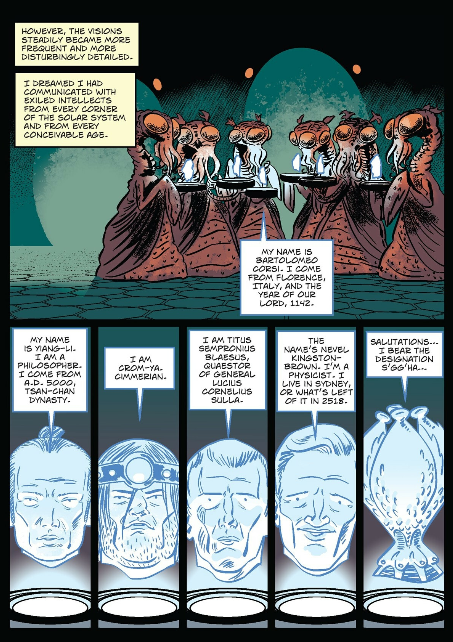
Figure 1. I.N.J. Culbard, The Shadow Out of Time, p.47, Copyright © 2013 SelfMadeHero, reproduced by permission of SelfMadeHero.
47Culbard’s illustrations of the enemies of the Yiths are even more evocative: he makes them beings that are also disturbing, with primitive shapes, the upper part of which forms a scaly-looking dome under which hundreds of wiry tentacles intertwine, in a dark shade of red. Their bodies can be reminiscent of the umbrella-like body of a jellyfish as well as the bulb of a plant, and their multiple tentacles seem like entangled roots (fig. 2). The creature is, in accordance with the first descriptions of the polypus that already raised metaphysical questions in Blake, outside the norms that shape the very system of natural history.
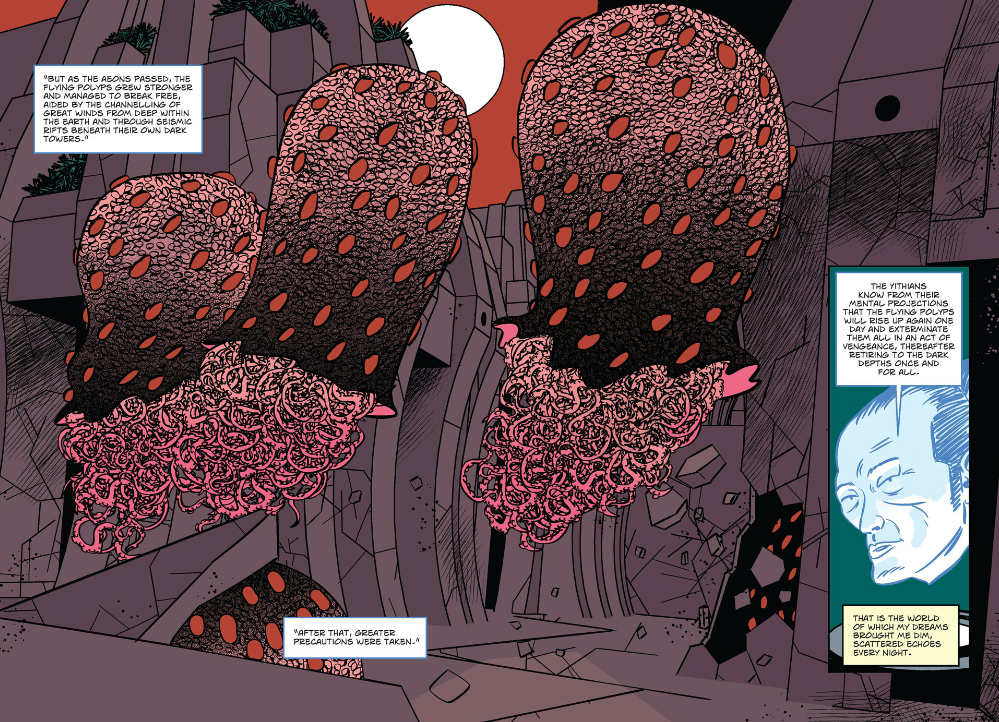
Figure 2. I.N.J. Culbard, The Shadow Out of Time, p.54, Copyright © 2013 SelfMadeHero, reproduced by permission of SelfMadeHero.
48In this respect, this representation is faithful to the tradition of questioning raised by the polyp: an essentially elusive creature, which ignores biological classifications and escapes the previously established reading grids of the living. It is part of a continuity of representation of the polypus, which reflects this instability of the living par excellence, this palpable anxiety in front of a being which evades all rules and opens a breach in the order of nature.
49Such representations could also be found in an even more exacerbated way in Blake, with beings which seem to be half-men, half-polypi, whose lower and upper limbs change into tentacles or roots: this illustrates in Blakean poetry the fall of the human soul into the world of materialism and generation. This is particularly the case in Milton’s First Book, where human bodies are distorted.39 The limbs are extended by networks of roots or tentacles, which evoke the fall into the state of Vegetation. However, this term is to be understood in the Blakean sense: Vegetation is, by definition, what is vegetative, encased in a materialistic straitjacket or bark and closed to the spiritual world. Plants represent this dormant life, which takes root in the earth and struggles to rise to the divine heights.
50Blake’s engravings, however, never depict the monstrous polypus as it is mentioned in his narrative poems. This absence, or more precisely this refusal of graphic representation, seems eminently paradoxical at first: the polypus, a creature that embodies triumphant materiality, itself escapes any attempt at visual materialization. However, it illustrates well the elusive character of this creature, which blurs the tracks and reigns, and whose monstrosity borders on the unrepresentable: because it is outside our categories of representation, it is in fact elusive. Escaping the intellect, it also hides from view.
51In this, Blake’s polypus is close to Lovecraft’s polypus-like monsters: Cthulhu is a supposedly unpronounceable name, just as Blake’s polypus is unrepresentable. Lovecraft semantically takes up the codes that Blake uses visually: the monstrous, contrary to what its etymology suggests, is not what is shown (“monster” comes from monstrare, to show, in Latin) but what cannot be shown, what is inconceivable and unthinkable. Both Blake and Lovecraft understood that the only thing scarier than a monster that can be seen is a monster that cannot be seen, but that will directly affect the reader’s imagination.
52Thus, one might think that any attempt at illustration is necessarily aporetic, but that would be forgetting that Lovecraft is committed to giving key elements of description of his own monsters, unlike Blake. Culbard, in his illustrations freely inspired from Lovecraft, chooses to reveal the monster in a progressive way, panel by panel (fig. 3), thus playing with the reader’s imagination, as Blake does, before unveiling the creatures in their entirety in the double-page spread: he fulfills his mission brilliantly, remaining faithful to Lovecraft while perpetuating the Blakean traditions to disclose the monstrous in the reader’s imagination.
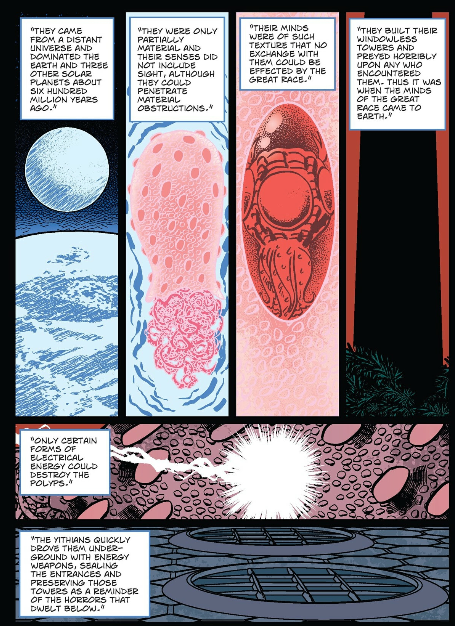 Figure 3. I.N.J. Culbard, The Shadow Out of Time, p.53, Copyright © 2013 SelfMadeHero, reproduced by permission of SelfMadeHero.
Conclusion
53Darwin’s reflections on the “generation” of the polypus initially opened new perspectives for what would then become known as biology. The fact that Darwin did not choose to write about the polypus in verse in his long didactic poem, The Botanic Garden, which had been illustrated by Blake, may have encouraged Blake to use it as an original motif which also enabled him to subvert the scientific doxa and build his own system.
54Darwin’s scientific study of the polypus in Zoonomia could thus be considered as the root of the genealogical tree of the polypus in modern literature, as the polypus would then represent the labyrinths of rationality or the traps of organic generation in Blake’s poetry, echoing Lovecraft’s concerns on the polypus being a vehicle for destructive knowledge and primitive materiality. Such literary ramifications are also figurative ones in the imagery of the polypus, whose tentacles are often associated with the image of roots reaching out to alienate the human mind and body.
55The polypus consequently remains a creature which, after having captured the imagination of scientists and poets such as Erasmus Darwin with its fundamentally hybrid and atypical character, has been perfectly integrated into the monstrous pantheon of visionary authors like Blake and Lovecraft, which testifies to a successful “confluence” of this motif. The popularity of the polypus has been sprawling, as it has extended to the visual arts, where its problematic representation is the subject of singular challenges for past and present artists, including comic book artists like Ian Culbard who, through his clever aesthetic choices, are in perfect continuity with the dark imagination of his inspirations.
56Finally, rather than an “anxiety of influence”, as defined by Harold Bloom, this shape-shifting polypus represents the “influence of anxiety”. With Blake, the polypus, which was a shape-shifting biological entity, became a poetical one as well; its nightmarish ramifications, subverting the categories of the living and spiritual forms, seized the visual imagination of authors and artists, so that the sense of horror that it had initially inspired in Blake is still alive today, as is the power of the Romantic visual imagination.
1 William Blake, Milton [c. 1804], in The Complete Poetry and Prose of William Blake, ed. by David Erdman [1965], London and New York, Doubleday, 1988, p. 96.
2 Abraham Trembley, “Observations and experiments upon the fresh-water Polypus, by Monsieur Trembley, at the Hague”, Philosophical Transactions of the Royal Society of London, London, Woodward, 1743, vol. 467, p. 7.
3 Susannah Gibson, Animal, Vegetable, Mineral? How Eighteenth-Century Science Disrupted the Natural Order, Oxford, Oxford University Press, 2015, p. 53-55.
4 Denise Gigante underscores that the shape-shifting polypus is a source of fear: this “lack of discrete creaturely identity” is “frightening”, though it can also “hold hope for transformation” and be a potential “symbol of revolutionary power.” Denise Gigante, Life: Organic Form and Romanticism, New Haven and London, Yale University Press, 2009, p. 129.
5 Theresa Kelley draws an analogy between the polypus and the Venus fly-trap, a carnivorous plant, to highlight how such beings could disrupt the early orders of classification in the 1740s. Theresa Kelley, Clandestine Marriage: Botany and Romantic Culture, Baltimore, Johns Hopkins University Press, 2012, p. 217.
6 Janelle Schwartz, Worm Work: Recasting Romanticism, Minneapolis, University of Minnesota Press, 2012, chapter IV, “Blake and Taxonomy”.
7 Paul Miner, “The Polyp as a Symbol in the Poetry of William Blake”, Texas Studies in Literature and Language, 2:2 (Summer 1960), p. 198-205.
8 Kevin Hutchings, Imagining Nature: Blake’s Environmental Poetics, Montreal and Ithaca, McGill-Queen’s University Press, 2002, p. 194.
9 David Erdman, A Blake Dictionary: The Ideas and Symbols of William Blake, Hanover, New Hampshire, Dartmouth College Press, 2013 [first edition in 1965], p. 332-333.
10 Harold Bloom, The Anxiety of Influence: A Theory of Poetry, Oxford, Oxford University Press, 1973.
11 Sophie Musitelli used this term in her pioneering study on the impact of Erasmus Darwin’s prose and poetry on Shelley’s works: ‘The Harmony of Truth’ : Sciences et poésie dans l’œuvre de P. B. Shelley, Lyon and Grenoble, Presses Universitaires de Lyon et Presses Littéraires et Linguistiques de l’Université de Grenoble, 2012.
12 For a more extensive study of the motif of the polypus in Blake’s poetry, see the PhD thesis of Caroline Dauphin, “Eros et Uranie: Passions animales et végétales dans la poésie d’Erasmus Darwin et de William Blake”, Sorbonne Nouvelle, 2021. Camille Adnot also conducted research on the motif of the polypus in her own PhD thesis, ‘In Midst of Chaos:’ Disorderly Orderings in William Blake’s Illuminated Books, Université Paris-Cité, 2023.
13 Kathleen Raine, Blake and Tradition, Princeton, Princeton University Press, 1968, vol. II: “[The fall into Generation and Vegetation] seems to be the product of Blake’s vivid imaginative realization of passages he found in Erasmus Darwin […] this vegetable life, almost animal, is, Blake must have felt, horrible, like the polypus, an animal life almost vegetable” (p. 240-241).
14 Though the official date of publication is 1791, as it appears on the first page of the original edition of the Botanic Garden, the correspondence between Darwin and his editor shows that the book was only published later, in 1792. See Desmond King-Hele, Erasmus Darwin: A Life of Unequalled Achievement, London, Giles de la Mare, 2007 [first edition in 1988].
15 William Blake, The Book of Los [c. 1795], op. cit., p. 93.
16 Erasmus Darwin, The Botanic Garden, Part I, The Economy of Vegetation, London, Joseph Johnson, 1791 [actually 1792], note xxvii: the eight-footed polypus is said to attack “Pinna”, a species of aquatic shellfish, p. lxii.
17 Erasmus Darwin, Zoonomia; or, the Laws of Organic Life, London, Joseph Johnson, 1794, vol. 1, p. 495.
18 However, this point remains debatable, as it would imply classifying the polypus as part of the animal kingdom, which remained a bone of contention in the late eighteenth century. Helen Bruder’s insightful analysis of the Blakean bestiary deals with dogs, tigers, horses, butterflies and even fleas, but does not say a word about the polypus, precisely because of its ambiguous nature. Helen Bruder (ed.), Beastly Blake, Basingstoke, Hampshire, Palgrave Macmillan, 2018.
19 William Blake, The Book of Los, op. cit., p. 93.
20 Erasmus Darwin, Zoonomia, or, the Laws of Organic Life, op. cit., p. 488.
21 William Blake, The Four Zoas [c.1797], op. cit., p. 337.
22 William Blake, Milton, op. cit., p. 109.
23 Ibid., p. 120.
24 Ibid., p. 127.
25 Ibid., p. 134.
26 Ibid., p. 138.
27 Howard Phillips Lovecraft, Selected Letters, ed. by August Derleth and Donald Wandrel, Sauk City, Arkham house, vol. II, p. 273. Letter to Franck Belknap Long, 20 February 1929.
28 Howard Phillips Lovecraft, “The Haunter in the Dark” [1935], The Call of Cthulhu and Other Weird Stories, London, Penguin, 2002, p. 336.
29 Ibid., p. 348.
30 Ibid., p. 350.
31 “A monster of vaguely anthropoid outline, but with an octopus-like head whose face was a mass of feelers, a scaly, rubbery-looking body, prodigious claws on hind and fore feet, and long, narrow wings behind.” Howard Phillips Lovecraft, “The Call of Cthulhu” [1928], op. cit., p. 148.
32 Howard Phillips Lovecraft, “The Shadow Out of Time” [1936], The Dreams in the Witch House and Other Weird Stories, Penguin, 2005, p. 352.
33 Howard Phillips Lovecraft, Selected Letters, vol. II, op. cit., letter to Franck Belknap Long, 20 February 1929, p. 273.
34 William Blake, Visions of the Daughters of Albion [1793], op. cit., p. 47.
35 William Blake, The Marriage of Heaven and Hell [1790], op. cit., p. 35.
36 Howard Phillips Lovecraft, “The Shadow Out of Time” [1936], op. cit., p. 363.
37 Ibid., p. 364.
38 Howard Phillips Lovecraft, Selected Letters, ed. by August Derleth and Donald Wandrel, Sauk City, Arkham house, vol. III, p. 399-400. Letter to J. Vernon Shea, 21 August 1931.
39 David Bindman, William Blake: The Complete Illuminated Books, New York, Thames and Hudson, 2000, p. 263. A similar case of polyp-like men in Jerusalem is also explored in further detail by Camille Adnot’s article in the present volume.

Ce(tte) œuvre est mise à disposition selon les termes de la Licence Creative Commons Attribution - Pas dUtilisation Commerciale - Partage dans les Mêmes Conditions 4.0 International. Polygraphiques - Collection numérique de l'ERIAC EA 4705
URL : https://publis-shs.univ-rouen.fr/eriac/1132.html.
Quelques mots à propos de : Caroline Dauphin
Caroline Dauphin has been teaching in preparatory classes (CPGE) at the Lycée Militaire de Saint-Cyr since 2022. She is also a member of the research unit PRISMES, 19-21 (EA4398) at Sorbonne Nouvelle University. Her thesis, on the representations of nature and science in the poetry of Erasmus Darwin and William Blake, was defended in 2021 at Sorbonne Nouvelle University and was awarded the Prix de Thèse des Etudes Romantiques the following year. Her publications include chapters in collective works such as Poésie et Astronomie: de l’Antiquité au Romantisme (UGA, 2020), Keats’s Poetry and Prose (Ellipses, 2021), and Poétiques et Poésie de l’Insecte (Honoré Champion, 2023).